
Music like society has changed drastically in terms of including human rights. For this post I will be showing how music has helped and shown the transformation of women’s equality. I believe this is an important feature in our society and I wanted to know how songs throughout history have shown growth and strengthening of equality for women over the years. Not only that but I also wanted to know how music has let women advocate for themselves and there rights. I thought it would be an interesting topic and also let me appreciate how far we’ve come.
March Of Women – 1910
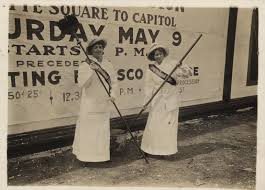
Quick history recap: The 19th amendment is the right for a citizen of any sex to vote. This was put into place on August 19th 1920. This is important background information for this next song because it was composed in 1910. It is called “March of Women” and it was made by Ethyl Smyth and Cicely Hamilton. This song was the anthem of the Women’s Social and Political Union along with suffragettes in the UK. It was the song sung at most rally’s and political protests including the protest on May 9th in 1914 by the Congressional Union for Woman. This protest was a major contributing factor to getting the amendment passed and the song was how they got there message across.
Musical Elements:
This song is in 4/4 and I could not find its BPM anywhere online but I’s say it is at a good walking pace or at least adagio (66-75 bpm). The soloist also reaches quite an impressive range in this version of the song. You can almost feel how passionate they were about their cause in the song . Personally I don’t think it is “catchy” as the song more modern songs I like to listen too but it makes up for that in meaning.
I am Woman – 1971
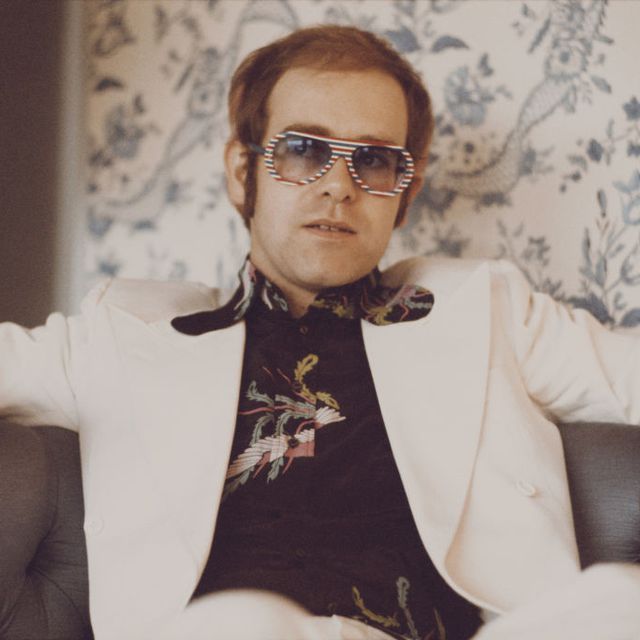
“I am Woman” was sung by Helen Reddy in 1971. It is the perfect transition song between the 1910 song and the 2019 song to understand what was revolutionary in terms of pushing social boundaries. While Reddy’s song did not pass any amendments it was a song of empowerment that reached many women. In fact it hit number 1 on the Billboard Hot 100 chart in 1972. I became the unofficial anthem of the second wave feminist movement. Lines like “I can do anything” and “I am woman, hear me roar” are some of the best examples of why this song was so powerful and iconic. “I am woman . hear me roar” became a very well known saying in the media that symbolized that woman will be acknowledged.
Musical Elements:
It is sung as 171 Bpm or presto (168-208). Also the song screams 70’s by the beat alone and even more so by the sound quality in the music video. It is also much more “catchy” once again with a definite chorused really great back-up singers. The back-up singers particularly emphasize the words “strong” and “invincible” in the chorus which is definitely not a coincidence. Reddy also tends to emphasize or linger on the word “woman” quite a bit throughout the song.
Like a Girl – 2019
This is “Like a Girl” by Lizzo released just this year. This was the song that inspired me to write about this topic in the first place. It is one of my favorite songs currently, because of the pace and lyrics. I also think it is important to note that Lizzo herself is becoming a feminist icon as she preaches body positivity and uses her role as a celebrity to share that every girl should be comfortable with however they look. She talks on The Daily show with Trevor Noah where she describes how she makes songs about “body positivity” for herself and not to start a revolution. She said in the show “I am literally here making music so I can live a more positive, healthier, happier life, and if that changes the world one song at a time then so be it.” Her cover for her album is purposefully made with the intention to show that point.
Musical Elements:
The tempo is 144 BPM in Lizzo’s “Like a Girl” and once again in 4/4 time. The song has a strong chorus that is repeated 3 times which makes you remember it and personally makes it good song to listen and sing to. It also has a really strong bridge at the end with really strong lines like “So if you fight like a girl, cry like a girl, do your thing, run the whole damn world.”
Conclusion:
Throughout the years it is very easy to see that respect and equality for women has grown. It started with a goal to get something as basic as the right to vote with the suffragettes. Then to Helen Reddy advocating the fact that women should be heard and respected equally as our brothers. Fast forward to Lizzo preaching about how girls should always be accepted and confident in their bodies. These singers and so many others, paved and are paving the way for future generations of girls, so that they can be proud, confident and treated with respect.
Overview of this Course and Blog Experience:
I was so excited to find out when I started this class that it meant I got to write down my thoughts on music online. It totally lived up to my expectations! I had so much fun writing these posts and my knowledge of the music world has expanded greatly. I appreciate all those who read them because I know I can ramble and I am sure there were some grammar errors along the way. During this coarse I got to look at my peers’ works and got to listen to songs they chose. I read so many good songs and facts about the people and cultures that they originated from. This will most likely be my last post so thank you for reading!
Work Cited:
“Congressional Union for Woman Suffrage.” Wikipedia, Wikimedia Foundation, 31 May 2019, en.wikipedia.org/wiki/Congressional_Union_for_Woman_Suffrage.
“The March of the Women.” Wikipedia, Wikimedia Foundation, 26 Jan. 2019, en.wikipedia.org/wiki/The_March_of_the_Women.
Bologna, Caroline. “17 Feminist Songs That Were Ahead Of Their Time.” HuffPost, HuffPost, 5 Dec. 2016, http://www.huffpost.com/entry/17-feminist-songs-that-were-ahead-of-their-time_n_56fc6b46e4b0daf53aeeaf5a?guccounter=1&guce_referrer=aHR0cHM6Ly93d3cuZ29vZ2xlLmNvbS8&guce_referrer_sig=AQAAALC90Y9dnaQ9qp_lOndPYBLsr3pl9sAG723U2mILoW4SgMYAQpvPhKcuNNsN8J79Um56aq6jZhUoNtJZ8EVtF6cB6IFBPaKfdjcdU-xhidTtrgon1bPm-gZL8FWY7PhCstfngqVqfjFMn5rDsEqUyX1luUWEnJp4BHBPLbOloOjV.
Rosenberg, Sari. “December 9, 1972: Helen Reddy’s ‘I Am Woman’ Hit No. 1.” Lifetime, 9 Dec. 2017, http://www.mylifetime.com/she-did-that/december-9-1972-helen-reddys-i-am-woman-hit-no-1.




 Onyx Odyssey